

Nonchalant Signification : Un guide honnête de l'argot (2026)
Quick answer: nonchalant means calm, casual, and totally unbothered — acting like nothing fazes you. It is a real word (it has been in English for centuries), but online it has taken on a second life as the ultimate compliment et a sneaky insult. It can mean “effortlessly cool” or “emotionally checked out,” depending entirely on the vibe.
If you have seen “the most nonchalant man alive” videos and wondered whether it is a good thing, you are asking the right question. Let me break down what it actually means, where the trend came from, and when it crosses from cool into cold.

Nonchalant meaning: what does it really mean?
At its core, nonchalant describes a relaxed, casually indifferent attitude — you stay cool, you do not get worked up, and you make it look easy. The word comes from French, literally “not caring.” That calm-under-pressure energy is genuinely attractive, which is exactly why it became slang.
nonchalant = calm, casual, and unbothered — projecting that nothing gets to you.
The catch is that the same behavior reads two very different ways:
| What it looks like | How it reads |
|---|---|
| Staying calm under pressure | Confident, composed, attractive |
| Effortlessly unbothered | Cool — the good kind |
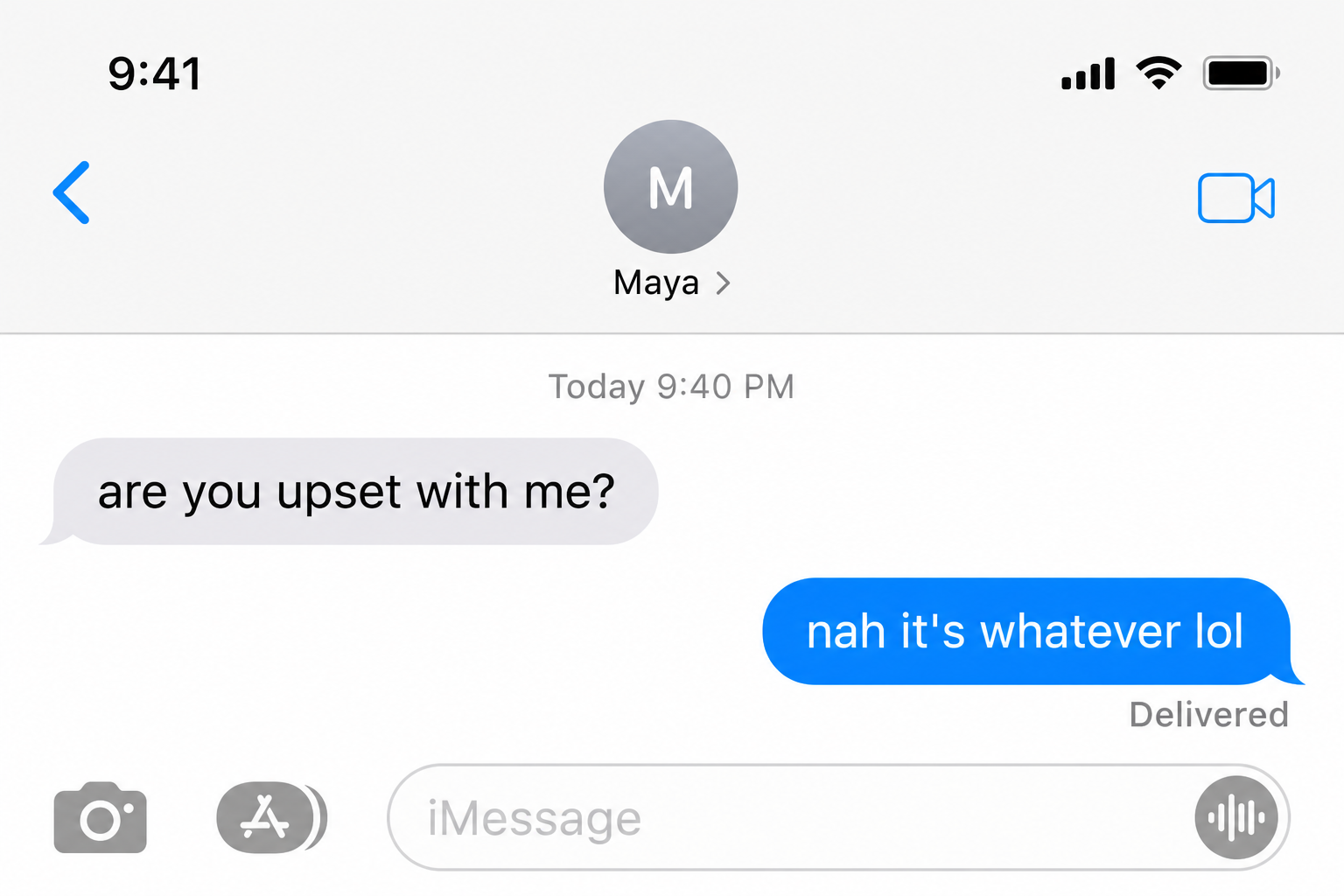
| Leaving you on read for hours | Emotionally unavailable |
| Acting like nothing matters | Dismissive, even a little cold |
Where the “nonchalant” trend came from
The word is old, but the meme is new. Around 2023–2024, TikTok ran wild with “the most nonchalant man” clips — videos of guys staying almost comically unbothered in situations where most people would react. It pairs naturally with the same effortless-cool energy as sigma et aura farming, and you can trace the broader vocabulary in our 2025 slang guide and in Wikipedia’s Gen Z slang list.
How to use “nonchalant” (with examples)
- As a compliment: “He stayed so nonchalant during the interview, total pro.”
- As a soft drag: “She is being way too nonchalant about this, does she even care?”
- Self-aware: “Trying to stay nonchalant but I am freaking out inside.”
The tone of voice does all the work. Said with admiration, it is praise; said with an eye-roll, it is a critique of someone who is a little too unbothered.
Is being nonchalant a good thing?
Honestly, it depends on where you point it. Staying calm when you spill coffee or bomb a test is healthy composure. Being cold toward a friend who is upset, or someone you are dating, reads as careless. The internet loves the aesthetic, but real coolness is being calm et still showing you care when it counts. For more on what reads as confident versus cold online, our emoji red flags guide is a good gut-check.
The words that travel with it
This vibe rarely shows up alone. You will hear it next to “unbothered” (the plainer version of the same idea), “lowkey” (quietly, no big deal), and the lone-wolf energy of sigma. They all chase the same prize: looking like the world simply cannot move you. The difference is dosage — a little reads as quiet confidence, a lot starts to read as a wall nobody can get past.
Is it attractive, or a red flag?
This is the question the whole trend dances around. In small doses, that calm, unbothered energy genuinely is appealing — it signals security, like you are not desperate for anyone’s approval. The flip side is real too: when “unbothered” becomes “I will not give you a straight answer or any effort,” it stops being cool and starts being exhausting. The most attractive version is the rarest one — relaxed on the surface, but still warm underneath when it actually matters.
How to respond when someone gives you the cold version
Getting a flat “it is what it is” when you wanted a real reaction is frustrating. The move that works is to name it without heat: “I honestly cannot tell if you are relaxed or checked out — which is it?” That hands them room to drop the act without it turning into a fight. Matching their shrug with an even bigger one usually just becomes a standoff nobody wins.
A quick history of the word
Long before TikTok, it arrived in English in the 1700s straight from French, where it literally meant “not heating up” — staying cool while everyone else boils over. For three centuries it was a slightly literary way to describe composure. What Gen Z did was strip away the formality and turn it into an everyday flex, but the core idea never changed: keep your cool, and make it look easy.
What does “nonchalant” mean?
Nonchalant means calm, casual, and unbothered — acting like nothing fazes you. It can be a compliment (cool and composed) or a quiet critique (emotionally distant), depending on tone.
What is “the most nonchalant man”?
It is a TikTok trend from around 2023–2024 featuring guys who stay almost comically unbothered in situations where most people would react. It celebrates effortless, unbothered cool.
Is being nonchalant a good or bad thing?
Both. Staying nonchalant under pressure is healthy composure. Being nonchalant about people’s feelings reads as careless or emotionally unavailable.
How do you act nonchalant?
Stay calm, keep your reactions low-key, and do not let small things rattle you. Just be careful not to confuse “unbothered” with “uncaring” toward people who matter.
Is “nonchalant” Gen Z slang?
The word is old, but Gen Z gave it new life as slang for effortless cool, especially through the “nonchalant” TikTok memes.




 English
  Español de México
  Português do Brasil
  日本語
日本語  Français
  Deutsch (Sie)