
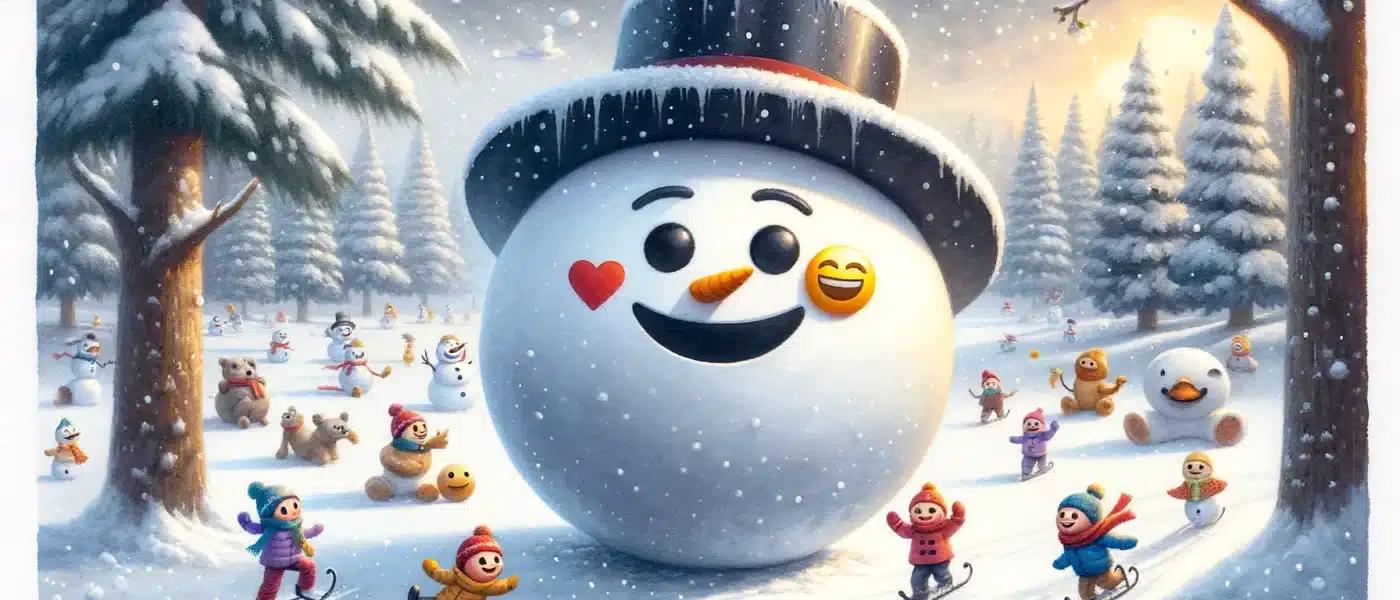
O Emoji Boneco de Neve ☃️- Revelando seu Pingente Gelado
Uma Terra das Maravilhas Invernal de Emojis: De Bonecos de Neve a Flocos de Neve ❄️📊
À medida que o ar fica fresco e os dias mais curtos, nossas conversas digitais começam a brilhar com os símbolos do inverno. Vamos nos agasalhar e deslizar pela variedade de emojis cobertos de neve que trazem a diversão gelada da estação para nossas telas. Do clássico Boneco de Neve ao aventureiro Snowboarder, cada emoji tem uma história, codificada na própria essência do universo digital. Aqui está uma tabela que apresenta os detalhes gelados desses emojis temáticos de inverno, seus pontos de código Unicode, a versão em que deslizaram e o ano em que fizeram sua estreia gelada.
| Emoji | Descrição | Ponto de código Unicode | Versão Unicode | Ano |
|---|---|---|---|---|
| ☃️ | Boneco de neve | Boneco de neve | 1.1 | 1993 |
| ⛄ | Boneco de Neve Sem Neve | ☃ | 5.2 | 2009 |
| 🌨️ | Nuvem com neve | ☁️ | 7.0 | 2014 |
| 🏂 | Snowboarder | U+1F3C2 | 6.0 | 2010 |
| 🎿 | Esquis | 🪁 | 6.0 | 2010 |
| ❄️ | Floco de neve | U+2744 | 1.1 | 1993 |
| 🥶 | Face fria | ❄️ | 11.0 | 2018 |
| 🧊 | Gelo | Calamar | 12.0 | 2019 |
| 🧤 | Luvas | Peão | 10.0 | 2017 |
| 🧣 | Cachecol | ❤️ | 10.0 | 2017 |
Um Resumo dos Melhores Emojis da Temporada
Esses emojis capturam a essência do inverno, cada um trazendo um toque único ao nosso léxico digital. Começando com o clássico Boneco de Neve, introduzido em 1993, e evoluindo para incluir as adições mais recentes, como os emojis de Rosto Gélido e Rosto Congelado, esta coleção nos permite expressar as inúmeras facetas da estação. Se você está nas pistas com os emojis de Snowboarder e Esquis ou se agasalhando com os emojis de Luvas e Cachecol, há um ícone para cada sentimento gelado. Então, da próxima vez que a temperatura baixar, deixe que esses emojis adicionem um toque de maravilha invernal às suas mensagens, aquecendo corações mesmo nos dias mais frios. ❄️💬
O Emoji de Boneco de Neve na Comunicação Digital
Expressões Emocionais e o Emoji de Boneco de Neve
Indicador de Humor: Transmitindo Emoções Através de um Amigo Gelado
O emoji do boneco de neve não é apenas um símbolo de inverno; é uma ferramenta versátil em nosso kit de ferramentas de expressão digital. É fascinante como este ícone simples pode expressar um espectro de humores e emoções. Vamos mergulhar nos detalhes gélidos!
- Alegria e Felicidade: A emoção mais óbvia associada ao emoji de boneco de neve é a felicidade. Enviar um emoji de boneco de neve pode instantaneamente trazer um sorriso ao rosto de alguém, especialmente ao falar sobre planos de inverno ou compartilhar cumprimentos de feriado.
- Nostalgia: Para muitos, o emoji do boneco de neve é um portal para memórias de infância, evocando sentimentos de nostalgia. É uma forma de relembrar os dias de neve passados construindo bonecos de neve com amigos e familiares.
- Frescor e Relaxamento: Às vezes, este emoji é usado para transmitir uma sensação de tranquilidade ou relaxamento. Imagine a seguinte situação: você está conversando sobre um plano para o fim de semana e insere o emoji do boneco de neve para mostrar o quão ‘tranquilos’ são seus planos.
- Sarcasmo e Humor: Em um contexto mais humorístico, o emoji de boneco de neve pode adicionar um toque de sarcasmo. Imagine responder a um amigo reclamando do calor com um boneco de neve para sugerir, de forma brincalhona, que ele precisa se refrescar.
Uso Criativo: Pensando Fora do Globo de Neve
Os emojis de boneco de neve, embora simples, oferecem uma tela para a expressão criativa. Aqui estão algumas maneiras únicas que as pessoas usam este emoji:
- Narração de histórias: Combine o boneco de neve com outros emojis para criar uma mini-história. Por exemplo, uma sequência de um sol, boneco de neve e uma poça de água poderia retratar de forma humorística o ‘ciclo de vida de um boneco de neve’.’
- Arte com Emojis: Alguns indivíduos talentosos criam figuras ou padrões maiores usando emojis, com o boneco de neve frequentemente estrelando cenas de inverno.
- Comunicação Temática: Durante o inverno ou a época de festas, as pessoas usam o emoji do boneco de neve para manter um tema festivo em suas mensagens ou postagens nas redes sociais.
⛄️ O Emoji Boneco de Neve e os Feriados de Inverno ao Redor do Mundo
Embora o emoji de boneco de neve tenha se originado no Japão, ele agora se espalhou pelo mundo como um símbolo universal e uma abreviação para diversão de inverno. Mas como outras culturas celebram o inverno e a estação fria? Vamos dar uma olhada em alguns feriados e tradições notáveis de inverno em toda a comunidade global.
🎄 Natal
Em muitas partes do mundo com populações cristãs, o Natal é o feriado de inverno mais importante. As festividades misturam tradições religiosas com as seculares, como Papai Noel, árvores, presentes e refeições em família. Para a maioria, o boneco de neve é um símbolo da magia natalina.
Festival Dongzhi ❄️
Na China, o Festival Dongzhi marca a chegada do inverno. Tradicionalmente, era um momento para as famílias se reunirem e comerem bolinhos de arroz tangyuan. O emoji de boneco de neve pode representar as festividades e reuniões do Dongzhi.
⛄ Hanucá
Hanukkah é o “Festival das Luzes” judaico de oito dias que celebra a redescoberta do Segundo Templo. Acender a menorá em família, comer alimentos fritos como latkes e sufganiyot, e jogar dreidel fazem parte da observância. O boneco de neve pode remeter à alegria das festas de inverno.
🕎 Solstício de Inverno
O Yule é um festival pagão de meados do inverno que celebra o renascimento com base no solstício de inverno, com origens no norte da Europa. Envolve banquetes, fogueiras, decorações de sempre-vivas e a queima do tronco de Yule. O emoji de boneco de neve pode ser usado para saudações de Yuletide.
🎿 Festival de Neve de Sapporo
O Festival de Neve de Sapporo, no Japão, é um dos maiores eventos de inverno, apresentando enormes esculturas de neve e gelo. Os visitantes podem ver bonecos de neve, castelos e personagens de anime esculpidos na neve, iluminados à noite. O emoji do boneco de neve representa essa festa.
Dia Roxo ☃️
O Dia Roxo, em 26 de março, promove a conscientização e educação sobre a epilepsia. Os participantes vestem roxo e o boneco de neve representa a ideia “Boneco de Neve ao Sol” de derreter as convulsões. O emoji ajuda a transmitir essa iniciativa.
Boneco de Neve Queimando ❄️
Na Suíça, algumas regiões têm a tradição de queimar bonecos de neve no final do inverno para marcar a mudança das estações. Uma prática invernal que o emoji de boneco de neve pode simbolizar!
Existem inúmeros outros festivais, feriados e tradições de inverno regionais celebrados de maneiras únicas ao redor do mundo, que o boneco de neve ajuda a capturar com seu simbolismo universal de inverno.
Então, mesmo que você more em um clima quente e sem neve, ainda pode enviar um emoji amigável de boneco de neve para espalhar alegria festiva gelada onde quer que esteja! O boneco de neve pertence aos amantes do inverno em todos os lugares.
❄️❄️❄️
E com seu sorriso acolhedor, chapéu alegre e braços finos estendidos, o emoji boneco de neve está pronto para adicionar um toque festivo a todos os seus bate-papos gelados e saudações de feriado.
Este pequeno emoji icônico captura a essência da maravilha e nostalgia do inverno. Ele constrói uma ponte de neve entre as culturas de clima frio ao redor do mundo.
Então deixe que suas mensagens congelem e descongelem com a ajuda do boneco de neve. Abrace sua excentricidade, inocência e calor emocional neste inverno. Basta um olhar para seu sorriso pontilhado para garantir aquela sensação aconchegante e gelada, não importa onde você more ou como celebre.
O emoji boneco de neve é o embaixador perfeito do inverno, capturando esta estação especial em um glifo encantador. Então, vá em frente, coloque um chapéu nele 🎩, construa um nariz de botão, e traga um boneco de neve para suas conversas hoje! ⛄☃️🎿
Além do Emoji: O Boneco de Neve na Cultura Pop
Dos Emojis aos Filmes – A Influência do Boneco de Neve
Cinema e TV: Bonecos de Neve Icônicos
O boneco de neve, figura tão profundamente enraizada em nosso tecido cultural, saltou de nossos telefones para as telas grandes e pequenas com um charme inegável. Vamos dar um passeio pelas cenas nevadas do cinema e da TV onde os bonecos de neve conquistaram nossos corações.
- Boneco de Neve: Não se pode falar de bonecos de neve na mídia sem mencionar o Frosty! Essa alma alegre e feliz com um cachimbo de espiga de milho, um nariz de botão e dois olhos feitos de carvão, ganhou vida pela primeira vez em um especial de televisão animado de 1969. Frosty é mais do que apenas um personagem; ele é um símbolo da magia do inverno e da alegria da temporada de festas.
- Olaf do filme ‘Frozen’ da Disney: Olaf, o adorável boneco de neve da bem-sucedida franquia “Frozen”, trouxe uma nova roupagem para a persona do boneco de neve. Seus sonhos de vivenciar o verão e seu humor inocente o tornaram um favorito entre crianças e adultos.
- O Boneco de Neve (1982): Este filme de animação sem palavras, baseado no livro de Raymond Briggs, conta a comovente história de um garoto que constrói um boneco de neve que ganha vida. É uma história tocante que captura a imaginação e o coração de qualquer pessoa que já construiu um boneco de neve.
Literatura e Arte: Um Símbolo em Livros e Telas
Na literatura e nas artes, o boneco de neve é frequentemente retratado como um símbolo da beleza, transitoriedade e, por vezes, solidão do inverno. Aqui estão alguns exemplos notáveis:
- ’O Boneco de Neve‘ de Raymond Briggs: Este livro ilustrado e sua adaptação cinematográfica subsequente retratam lindamente a amizade entre um menino e seu boneco de neve, enfatizando temas de amizade, admiração e a natureza fugaz da vida.
- Arte de Bonecos de Neve: Diversos artistas usaram a imagem do boneco de neve em pinturas e esculturas para evocar a quietude e a serenidade das paisagens de inverno. Algumas obras os retratam com um toque de irreverência, enquanto outras os utilizam para comentar temas mais profundos como isolamento ou mudança.
Concluindo
Reflexão Pessoal: O Emoji de Boneco de Neve, Um Símbolo de Alegria
Para mim, o emoji boneco de neve é mais do que um ícone digital; é um pequeno farol de alegria e nostalgia. Ele me lembra daqueles dias de inverno despreocupados, das tardes repletas de risadas a construir bonecos de neve e das noites aconchegantes enrolado em cobertores, a tomar chocolate quente. O emoji boneco de neve encapsula a magia do inverno e o calor da conexão humana, tudo em poucos pixels.
Chamada para Ação: Compartilhe suas histórias com o emoji de boneco de neve
Agora, eu adoraria ouvir você! Como o emoji de boneco de neve iluminou seus chats ou adicionou aquele toque gelado às suas expressões digitais? Você tem alguma memória especial ou um uso criativo para este adorável emoji? Compartilhe suas histórias, experiências ou até mesmo suas previsões futuras para este personagem frio, mas charmoso. Vamos continuar espalhando a alegria e o capricho que o emoji de boneco de neve traz para nossas vidas, uma mensagem de cada vez! ☃️💬🌟
PERGUNTAS FREQUENTES
O emoji boneco de neve foi introduzido pela primeira vez no Unicode 1.1 em 1993.
O emoji do boneco de neve evoluiu de um design simples em preto e branco para versões mais detalhadas e coloridas em diferentes plataformas.
Sim, o design do emoji de boneco de neve varia em diferentes plataformas, como Apple, Android e Twitter.
O emoji boneco de neve geralmente simboliza inverno, alegria e nostalgia da infância.
Sim, o emoji de boneco de neve é usado globalmente e pode representar o inverno, épocas festivas ou simplesmente ser um ícone lúdico, dependendo do contexto cultural.
Sim, personagens famosos de bonecos de neve incluem Frosty the Snowman e Olaf do filme “Frozen” da Disney.”
Com certeza! O emoji de boneco de neve é ótimo para marketing sazonal e para adicionar um toque divertido às publicações em redes sociais.
Usos criativos incluem contar histórias com emojis, criar arte com emojis e usá-lo em comunicação temática, especialmente durante o inverno.
Tecnologias futuras poderiam trazer versões 3D, animadas ou de RA do emoji boneco de neve, tornando-o mais interativo e personalizável.
Alguns artesanatos "faça você mesmo" incluem fazer bonecos de neve de meias, potes de conserva de boneco de neve ou criar enfeites de boneco de neve inspirados em emojis.
Encontre o emoji ☃️ boneco de neve em nosso Diretório de Emojis — copiar e colar, significados, combinações e emojis relacionados.





 English
  Español de México
  Português do Brasil
  日本語
日本語  Français
  Deutsch (Sie)