O Que os Emojis da Geração Z Realmente Significam: O Decodificador de 2026
Quick version: Gen Z emoji meanings almost never match the literal picture — to Gen Z, emojis rarely mean the thing they show. 💀 isn’t death, it’s “I’m dying laughing.” 🥺 isn’t sad, it’s begging-but-cute. This is your honest, no-cringe Gen Z emoji meanings decoder — what the big ones *actually* signal in 2026, so you can read the room (and the group chat) like a native.
Emoji are basically tone of voice in text form, and Gen Z rewrote the dictionary. If you’ve ever sent a totally normal 👍 and gotten left on read, this guide is for you. Let me decode the ones that matter most — because Gen Z emoji meanings shift faster than any dictionary can keep up.
Gen Z emoji meanings: the most misunderstood ones
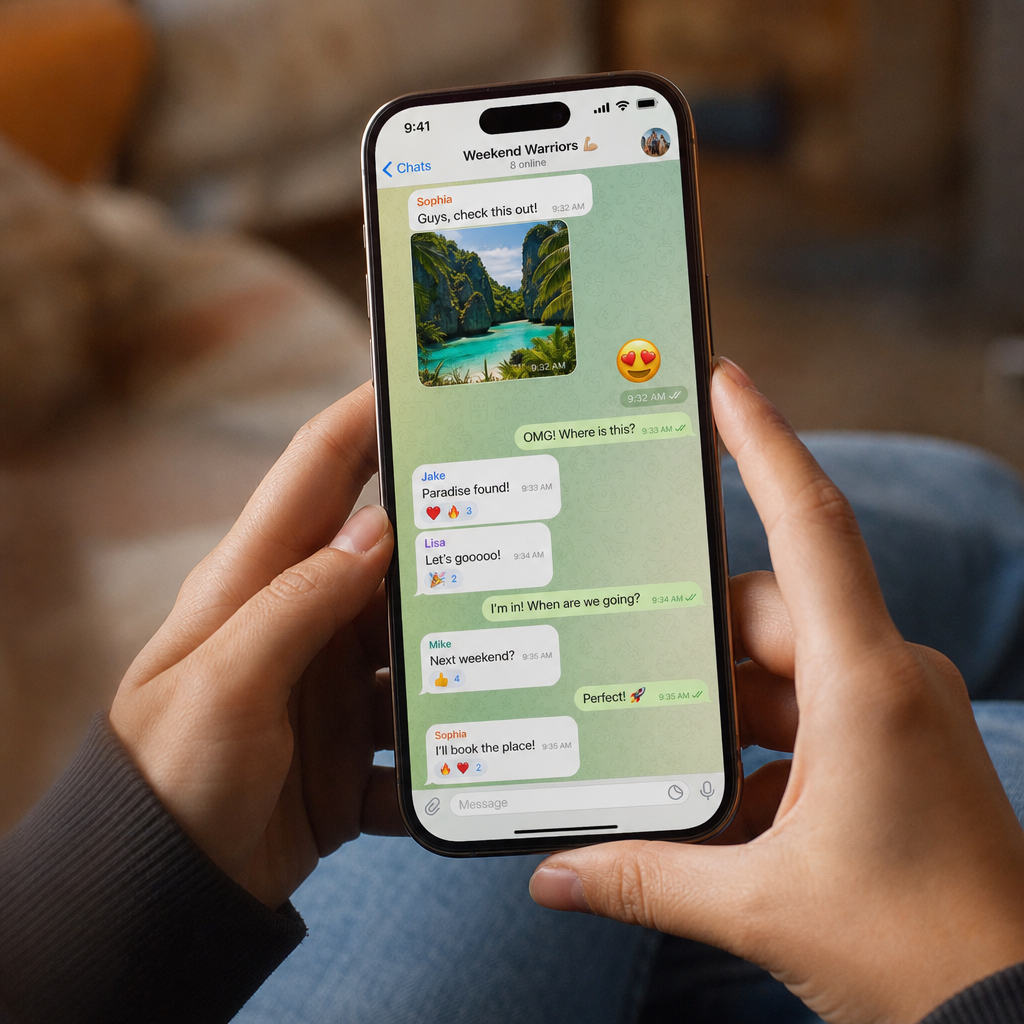
Here’s what these really mean when a Gen Z texter uses them:
- 💀 Skull — “I’m dead 💀” = that’s hilarious. It replaced 😂 as the go-to laugh.
- 😭 Loudly crying — usually não sadness. It’s overwhelmed-with-emotion, most often laughing or “this is too much (affectionate).”
- 🥺 Pleading face — begging, but make it adorable. Used to ask for things or react to something cute.
- 🔥 Fogo — “excellent,” not literal fire. A great outfit, a hot take, someone who looks good.
- 🗿 Moai — stoic, deadpan, “bruh” energy. Often paired with sigma/”no emotion” jokes.
- 💅 Nail polish — unbothered, sassy, “anyway, as I was saying.” Confidence and a little shade.
- 🫠 Melting face — “I’m overwhelmed / this is chaos and I’ve accepted it.” Ironic self-awareness.
- 🧍 Person standing — awkward silence, “I just stood there,” not knowing what to do.
- ✨ Sparkles — sarcasm or emphasis around a word. “It’s ✨fine✨” rarely means fine.
- 🤡 Clown — calling yourself (or someone) a fool. “Thought he liked me. 🤡”
- 👀 Olhos — “I’m watching,” suspicious, or “oh?? tell me more.”
The emojis that quietly age you
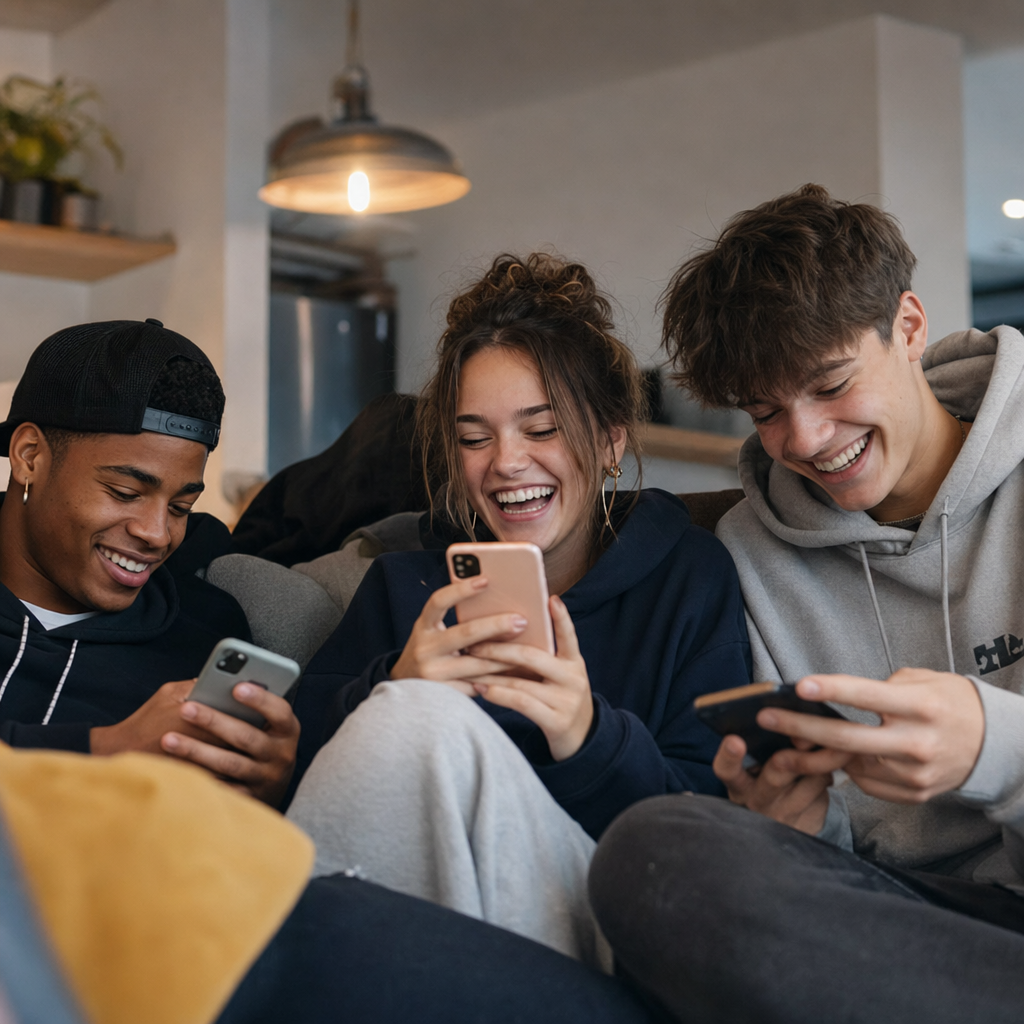
Here’s the uncomfortable part: some emojis basically announce that you’re over 30. The classic 😂 “face with tears of joy,” the 👍 thumbs-up (can read as passive-aggressive to Gen Z), and the ❤️ used too earnestly can all date you. We did a whole breakdown of these — see the emoji red flags that make you look old if you want to audit your own texting.
It’s not just single emojis — combos carry meaning too
Gen Z stacks emojis into little phrases: 🧍♂️🤝🧍 for “we’re in the same awkward boat,” 🔥💀 for “this is insanely good,” 🥺👉👈 for shy-asking. If you want to speak fluently, our emoji combos guide is the cheat sheet.
The acronyms that travel with the emojis
Emoji rarely show up alone — they come bolted to texting slang. A few you’ll want decoded:
- ts pmo — “this sh*t pisses me off” (usually with 😭).
- wsg — “what’s good,” a casual hi.
- delulu — “delusional,” lovingly.
- pookie — a cutesy term of endearment.
For the full list, the 297 text abbreviations guide and the Gen Z emoji slang guide have you covered.
Why emoji meanings keep changing
Here’s the honest truth: there’s no official rulebook, and that’s the point. Meanings drift as jokes catch on, platforms shift, and each new wave of texters reinvents them — that’s exactly how 💀 went from “death” to “I’m dying laughing” in a few years — though every emoji still starts as an official character defined by the Consórcio Unicode, and the slang meaning is all us. So don’t memorize these like fixed law; treat them as a snapshot of how people use them *right now*, and keep reading the room. When in doubt, match the energy of whoever you’re talking to. That’s the real secret to Gen Z emoji meanings: context beats any fixed definition.
More Gen Z emoji translations
The decoder doesn’t stop at the classics. A few more you’ll see daily:
- 🙏 Folded hands — “please,” “thank you,” or “prayer circle.” Gen Z rarely reads it as a high-five anymore.
- 🫶 Heart hands — soft love and appreciation; “you’re so real for this.”
- 🤙 Call me hand — chill, “we good,” shaka energy.
- 🥴 Woozy face — tipsy, overwhelmed, or “this is a mess and so am I.”
- 🤌 Pinched fingers — chef’s kiss, “exquisite,” or mock-Italian emphasis.
- 🫡 Saluting face — “respect,” or a slightly defeated “ok, I’ll do it.”
- 🤓 Nerd face — used to mock a try-hard or “well actually” comment, not literal studiousness.
- 🧌 Troll — calling someone a troll, or admitting you’re being one.
Same emoji, different generation
The fastest way to see the gap is side by side. Here’s how a few emoji read depending on who’s texting:
- 😂 — Millennial: “that’s funny!” · Gen Z: “you’re old.”
- 👍 — Older: “okay, sounds good.” · Gen Z: passive-aggressive, even hostile.
- 💀 — Older: death, danger. · Gen Z: “I’m dead, that’s hilarious.”
- ❤️ — Older: sincere love. · Gen Z: a little earnest; 🩷 or 🫶 feels more “them.”
- 🥲 — Older: happy-sad. · Gen Z: “smiling through the pain,” peak relatable suffering.
None of this is a rule book — it’s a snapshot. But if you want your texts to read the way you intend, knowing which side of that table you’re on genuinely helps. Bookmark this Gen Z emoji meanings guide — we keep it current.
Questions people still ask
O que o emoji de caveira significa para a Geração Z?
Significa “morri de rir” - que algo é hilário. Ele substituiu em grande parte o emoji de rosto chorando de rir como o preferido para “isso é muito engraçado”.”
Por que a Geração Z usa o emoji chorando demais quando nada está triste?
Geralmente sinaliza estar sobrecarregado com emoção — mais frequentemente riso ou “isso é demais (de um jeito bom)”, não tristeza real.
Quais emojis te fazem parecer velho?
O clássico emoji de rosto com lágrimas de alegria, um joinha sincero e um coração vermelho excessivamente afetuoso podem ser interpretados como antiquados ou até passivo-agressivos pela Geração Z.
Os emojis têm significados diferentes para gerações diferentes?
Sim. O mesmo emoji pode ser lido completamente diferente por idade e contexto — a caveira significa “morrendo de rir” para a Geração Z, mas “morte” para muitos usuários mais velhos.
Por que os significados dos emojis continuam mudando?
Não existe um manual de regras oficial. Os significados mudam conforme as piadas pegam e as plataformas se alteram, então os emojis funcionam mais como gírias do que como símbolos fixos.





 English
  Español de México
  Português do Brasil
  日本語
日本語  Français
  Deutsch (Sie)